-

Multi-Tier Bitnami Grafana Stack on Azure
After seeing some tweets about Bitnami’s multi-tier Grafana Stack, I decided to give it a go. On the page describing the Grafana stack, there are several deployment offerings: I decided to use the multi-tier deployment, which deploys multiple Grafana nodes and a shared Azure Database for MariaDB. On Azure, the Grafana stack is deployed via… Read more
-

Azure Functions with Consumption Plan on Linux
In a previous post, I talked about saving time-series data to TimescaleDB, which is an extension on top of PostgreSQL. The post used an Azure Function with an Event Hub trigger to save the data in TimescaleDB with a regular INSERT INTO statement. The Function App used the Windows runtime which gave me networking errors… Read more
-

IoT with Azure Database for PostgreSQL and TimescaleDB
In IoT projects, the same question always comes up: “Where do we store our telemetry data?”. As usual, the answer to that question is not straightforward. We have seen all kinds of solutions in the wild: save directly to a relational database (SQL Server, MySQL, …) save to a data lake and/or SQL save to… Read more
-
Cloud Run on Google Kubernetes Engine
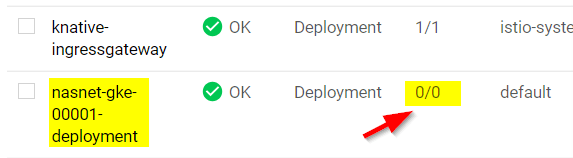
In this short post, we will take a look at Cloud Run on Google Kubernetes Engine (GKE). To get this to work, you will need to deploy a Kubernetes cluster. Make sure you use nodes with at least 2 vCPUs and 7.5 GB of memory. Take a look here for more details. You will notice… Read more
-
Trying Google Cloud Run
With the release of Google’s Cloud Run, I decided to check it out with my nasnet container. With Cloud Run, you simply deploy your container and let Google scale it based on the requests it receives. When your container is not used, it gets scaled to zero. As such, it combines the properties of a… Read more
-
Azure Front Door Revisited
A while ago, I wrote a post about Azure Front Door. In that post, I wrote that http to https redirection was not possible. With Azure Front Door being GA, let’s take a look if that is still the case. In the previous post, I had the following configuration in Front Door Designer: The above… Read more
-
Subscribe
Subscribed
Have a WordPress.com account? Log in now.

