-
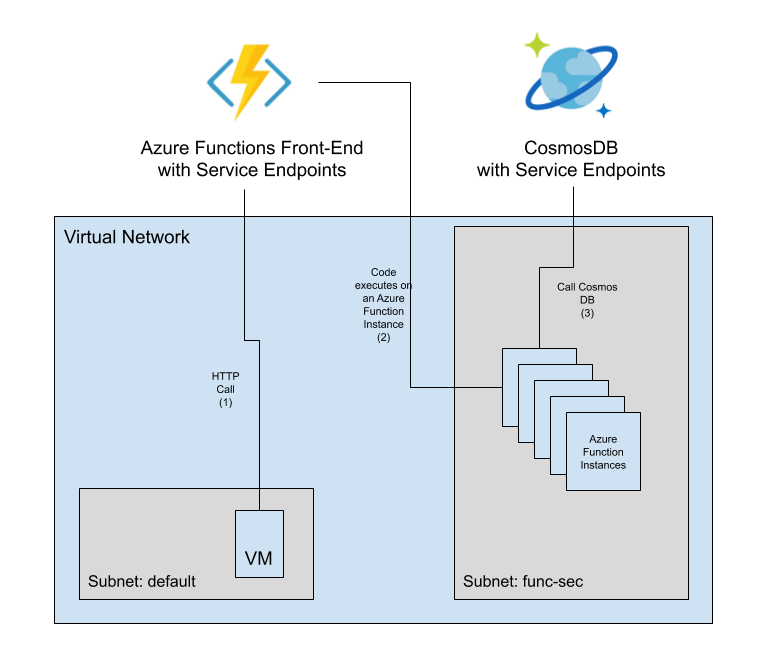
Securing access to and from Azure Functions
I am often asked how to secure access to and from Azure Functions that are not running in an App Service Environment (ASE). An App Service Environment allows you to safeguard your apps in a subnet of your Azure Virtual Network. In a sense, it gives you a private deployment of Azure App Service that… Read more
-
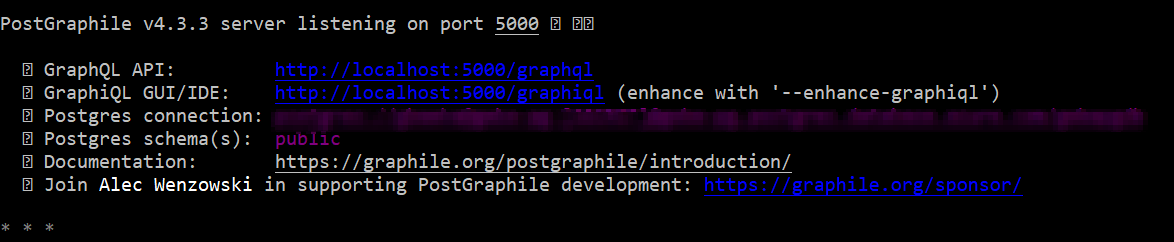
Querying Postgres with GraphQL
I wanted a quick and easy way to build an API that retrieves the ten latest events from a stream of data sent to a TimescaleDB hypertable. Since such a table can be queried by any means supported by Postgres, I decided to use Postgraphile, which automatically provides a GraphQL server for a database. If… Read more
-

Further improvements to the IoT Hub to TimescaleDB Azure Function
In the post Improving an Azure Function that writes IoT Hub data to TimescaleDB, we added some improvements to an Azure Function that uses the Event Hub trigger to write messages from IoT Hub to TimescaleDB: use of the Event Hub enqueuedTime timestamp instead of NOW() in the INSERT statement (yes, I know, using NOW() did… Read more
-

Revisiting Rancher
Several years ago, when we started our first adventures in the wonderful world of IoT, we created an application for visualizing real-time streams of sensor data. The sensor data came from custom-built devices that used 2G for connectivity. IoT networks and protocols such as SigFox, NB-IoT or Lora were not mainstream at that time. We… Read more
-
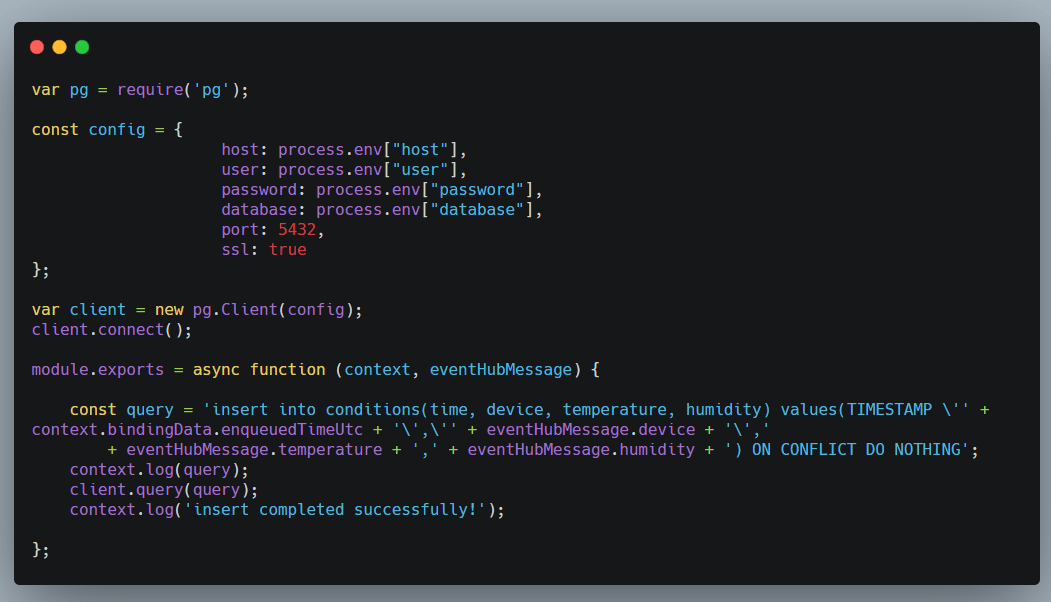
Improving an Azure Function that writes IoT Hub data to TimescaleDB
In an earlier post, I used an Azure Function to write data from IoT Hub to a TimescaleDB hypertable on PostgreSQL. Although that function works for demo purposes, there are several issues. Two of those issues will be addressed in this post: the INSERT INTO statement used the NOW() function instead of the enqueuedTimeUtc field;… Read more
-
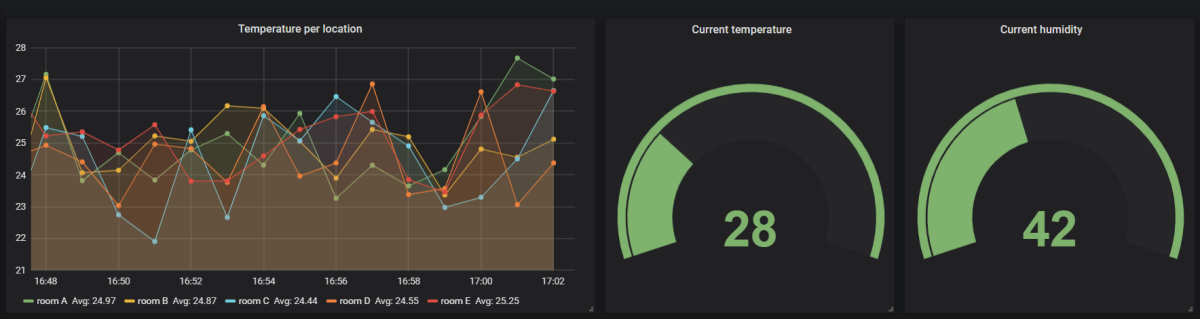
Dashboard your TimescaleDB data with Grafana
In an earlier post, I looked at storing time-series data with TimescaleDB on Azure Database for PostgreSQL. To visualize your data, there are many options as listed here. Because TimescaleDB is built on PostgreSQL, you can use any tool that supports PostgreSQL such as Power BI or Tableau. Grafana is a bit of a special… Read more
-
Subscribe
Subscribed
Have a WordPress.com account? Log in now.

