-
AKS Workload Identity Revisited
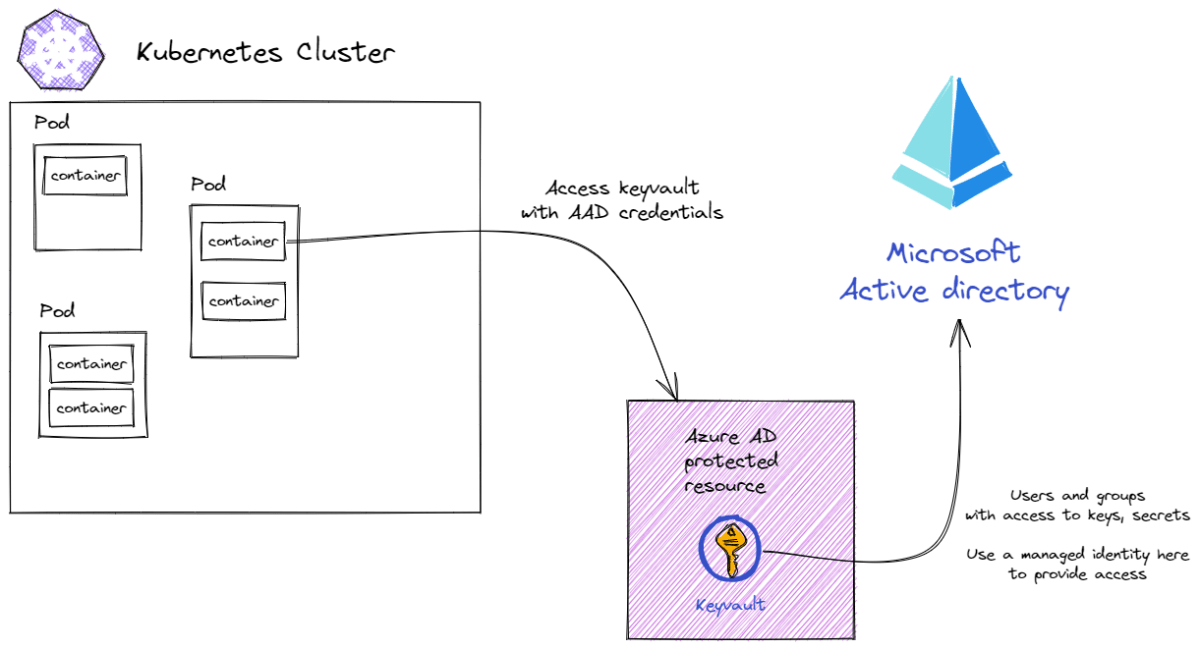
A while ago, I blogged about Workload Identity. Since then, Microsoft simplified the configuration steps and enabled Managed Identity, in addition to app registrations. But first, let’s take a step back. Why do you need something like workload identity in the first place? Take a look at the diagram below. Workloads (deployed in a container… Read more
-

A quick look at Azure App Configuration and the Python Provider
When developing an application, it is highly likely that it needs to be configured with all sorts of settings. A simple list of key/value pairs is usually all you need. Some of the values can be read by anyone (e.g., a public URL) while some values should be treated as secrets (e.g., a connection string).… Read more
-

First steps with Crossplane
Image Source: crossplane.io Although Crossplane has been around for a while, I never got around to trying it. Crossplane has many capabilities. However, in this post, I will focus on the following aspects: Installing Crossplane on a Kubernetes cluster (AKS); you can install on a local cluster as well (e.g., k3s, kind, minikube, …) but… Read more
-

Learn to use the Dapr authorization middleware
Based on a customer conversation, I decided to look into the Dapr middleware components. More specifically, I wanted to understand how the OAuth 2.0 middleware works that enables the Authorization Code flow. In the Authorization Code flow, an authorization code is a temporary code that a client obtains after being redirected to an authorization URL… Read more
-

Publish your AKS Ingress Controller over Azure Private Link
In a previous article, I wrote about the AKS Azure Cloud Provider and its support for Azure Private Link. In summary, the functionality allows for the following: creation of a Kubernetes service of type LoadBalancer via an annotation on the service, the Azure Cloud Provider creates an internal load balancer (ILB) instead of a public… Read more
-

Azure Kubernetes Service and Azure Private Link Integration
If you have done any work with Azure, you have probably come across terms such as Azure Private Link Service (PLS) and Private Endpoints (PEs). To quickly illustrate what Azure PLS is, let’s look at a diagram from the Microsoft documentation for Azure SQL database: Above, Azure SQL Database uses Azure Private Link Service (PLS)… Read more
-
Subscribe
Subscribed
Have a WordPress.com account? Log in now.

