Year: 2025 12 posts
Building an AI Agent Server with AG-UI and Microsoft Agent Framework
In this post, I want to talk about the Python backend I built for an AG-UI demo project. It is part of a larger project that also includes a frontend that uses CopilotKit: This post discusses the Python AG-UI server that is built with Microsoft Agent Framework. All code is on GitHub: https://github.com/gbaeke/agui. Most of…
Creating presentations with Microsoft Agent Framework and GAMMA API
Introduction Imagine automating the creation of professional presentations through a coordinated series of intelligent agents. In this blog post, we’ll explore how to build a workflow that combines research, outline generation, content creation, and design, all orchestrated through the Microsoft Agent Framework. We’ll build a practical example that generates presentations using: Azure OpenAI Responses API for…
Durable Execution for AI workflows
If you follow me on LinkedIn, you know I have talked about agentic workflows versus agents. Although everybody talks about agents, workflows are often better suited to many tasks. A workflow is more deterministic, is easier to reason about and to troubleshoot. Anthropic also talked about this a while ago in Building Effective Agents. In…
End-to-end authorization with Entra ID and MCP
Building an MCP server is really easy. Almost every language and framework has MCP support these days, both from a client and server perspective. For example: FastMCP (Python, Typescript), csharp-sdk and many more! However, in an enterprise scenario where users use a web-based conversational agent that uses tools on an MCP server, those tools might…
Deploying a multi-agent solution with MCP and A2A to Azure Container Apps
In previous posts, we discussed multi-agent scenarios, how A2A servers work (here and here) and how to deploy the infrastructure to host a multi-agent application on Azure with Azure Container Apps and AI Foundry. In this post, we will take a look at deploying the different components of the solution as containers in Azure Container…
Deploying AI Foundry Agents and Azure Container Apps to support an Agent2Agent solution
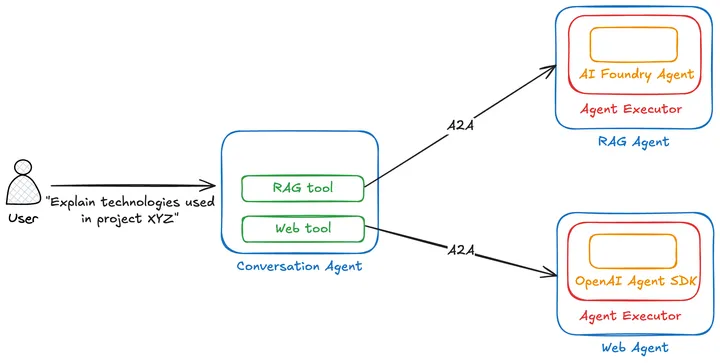
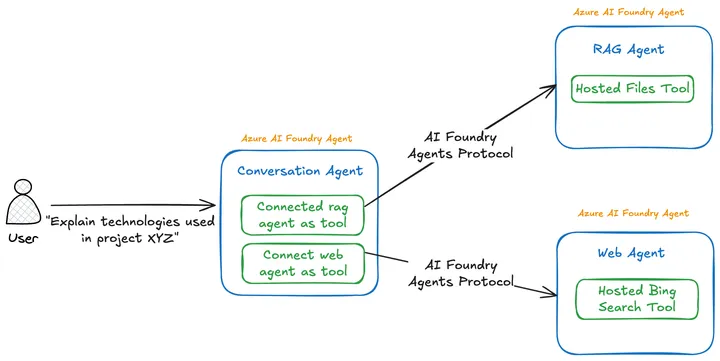
In previous posts, I discussed multi-agent solutions and the potential use of Google’s Agent2Agent protocol (A2A). In this post, we will deploy the infrastructure for an end-to-end solution like follows: Here’s a short description of the components. Component Description Foundry Project Basic Foundry project with a private endpoint. The private endpoint ensures private communication between…
Using tasks with streaming in Google Agent2Agent (A2A)
In a previous post we created a simple A2A agent that uses synchronous message exchange. An A2A client sends a message and the A2A server, via the Agent Executor, responds with a message. But what if you have a longer running task to perform and you want to inform the client that the task in…
Google’s A2A: taking a closer look
In the previous post, I talked about options to build multi-agent solutions. The last option used Google’s A2A. A2A provides a wrapper around your agent, basically a JSON-RPC API, that standardizes how you talk to your agent. In this post we take a closer look at the basics of A2A with simple synchronous message exchange.…
Building multi-agent solutions: what are your options?
When we meet with customers, the topic of a “multi-agent solution” often comes up. This isn’t surprising. There’s a lot of excitement around their potential to transform business processes, strengthen customer relationships, and more. The first question you have to ask yourself though is this: “Do I really need a multi-agent solution?”. Often, we find…
Building Configurable AI Agents with the OpenAI Agents SDK
In this post, I will demonstrate how to build an AI agent system where agents can collaborate in different ways. The goal is to create agents that can either work independently with their own tools or collaborate with other agents through two distinct patterns: using agents as tools or handing off control to other agents.…
Creating an agent with Hugging Face smolagents and Azure OpenAI
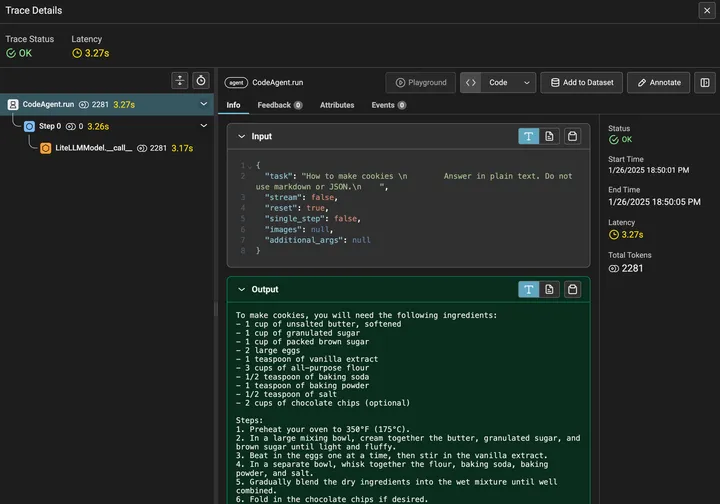
Artificial Intelligence (AI) agents have garnered significant attention, with numerous posts discussing them on platforms such as LinkedIn and X/Twitter. In that sense, this post is not different. Instead of theory though, let’s look at building an agent that has a reasoning loop in a very simple way. Although you can build an agent from…
Using Bing Search to ground LLM responses
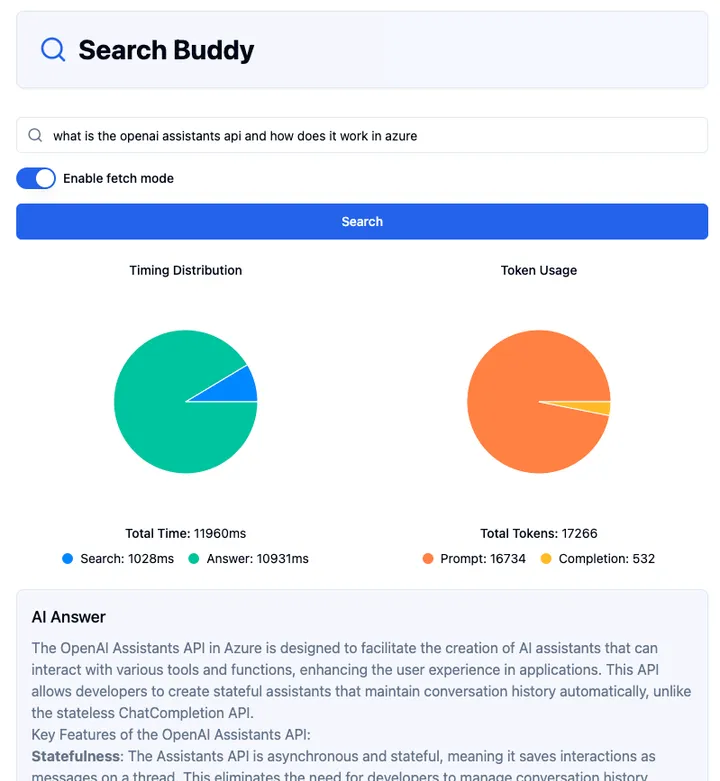
We often get the question to build an assistant based on the content of a website. These assistants often get implemented in one of two ways: Turn-based chat assistant: user can ask a question and follow-up questions Enhanced search: user asks a questions without the option to ask follow-up questions; this is often used to…